Incident Management

The officer tells the story. Legio handles what follows.

Structured intake. No re-entry. One record from first report to final disposition.
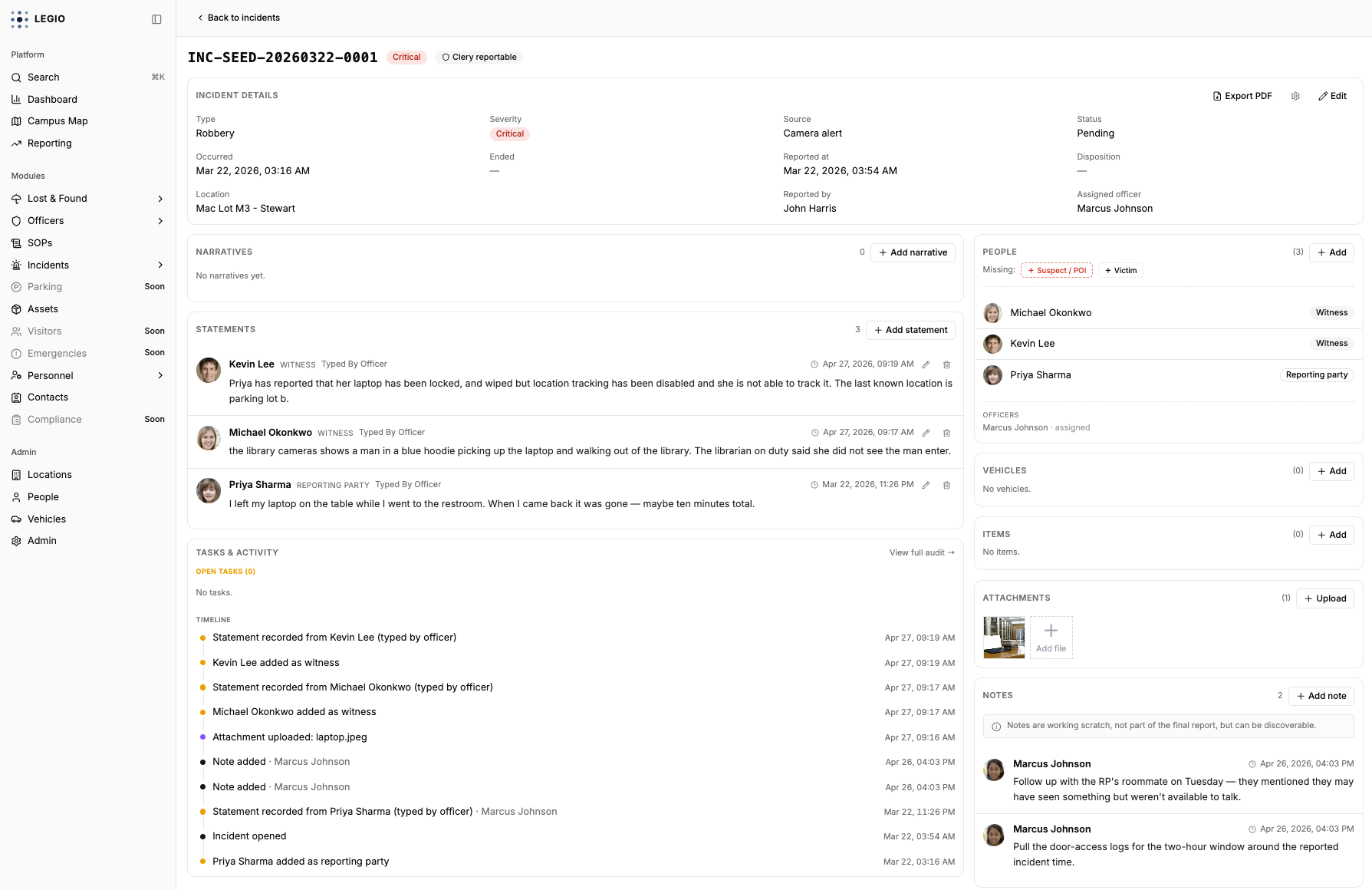
Legio incident management — incident detail view
The problem

Every incident generates work that has nothing to do with security.

Reports to write. Classifications to apply. Notifications to send. Regulatory boxes to tick. Legacy platforms digitized that work — they didn't eliminate it.

Officers still carry the administrative tail from every event they respond to. That time comes from somewhere — and it comes from security.

Reports written twice
Officers narrate the event in the field, then re-enter it into a system. Same information, entered twice, in different formats.
Classification done manually
Someone has to decide what category an incident falls into, whether it's reportable, and who needs to know. That logic should run automatically.
Compliance compiled at year end
Required reports are assembled from operational data that was never structured to feed them. It takes weeks. It shouldn't take minutes.

"The administrative burden that follows every incident is the biggest tax on operations. The best teams aren't the ones who do more paperwork faster. They're the ones who don't do it at all."

How it works

One record. From first report to final disposition.

Step 1 — Capture

Structured intake. The officer fills in what matters.

Guided, incident-specific fields mean officers capture the right information the first time. No generic forms. No missing fields to chase down later. The record is complete before the officer leaves the scene.

Incident intake
INCIDENT TYPE
Robbery · Critical
LOCATION
Mac Lot M3 — Stewart
SOURCE
Camera alert
Regulatory reportable
Auto-flagged
Automatic routing
Classified as regulatory reportable
Supervisor notified automatically
Follow-up task created
ASR record updated

All automatic. No one had to remember.

Step 2 — Route

Classification and routing run on the rules you set — not on memory.

Incident type determines what happens next. Reportable events get flagged. Supervisors get notified. Tasks get created. The right people know — based on logic you defined once, not based on whether an officer remembered to call someone.

Step 3 — Notify

The right people know immediately.

Tiered notification logic means your chain of command gets informed based on incident severity and type — not because an officer remembered to make a call.

Step 4 — Close out

Regulatory obligations handled. Automatically.

Required reports aren't something you prepare. They're something Legio has been building all year from your operational data. Review, sign, submit.

What's included

Every capability your incident program needs.

Built for physical security operations — not adapted from a generic case management tool.

Book 30 minutes →
Structured intake
Guided forms for every incident type
Officers see only the fields relevant to the incident in front of them. Mobile-first. Incident-specific. Complete before they leave the scene.
Automatic classification
Reportable events flagged without manual review
Reportable incidents classified automatically. No supervisor manually reviewing every report to decide what needs to go where.
Notification routing
The right people notified. Every time.
Tiered notification rules route alerts to supervisors, leadership, and legal based on incident type and severity — configured once, runs automatically.
Narrative management
Every statement, note, and update in one record
Officer narratives, witness statements, supervisor notes, and follow-up actions all captured in a single chronological record tied to the incident.
Regulatory compliance
Compliance data built from operations, not assembled at year end
Every classified incident feeds the Annual Security Report automatically. The report is ready because the data was always structured to produce it.
Investigations
Incidents that need more get the structure to support it
When an incident requires follow-up investigation, the record is already built. Assign investigators, track tasks, log findings — all tied to the original event.
Audit trail
Every action logged. Nothing missing.
A complete, tamper-evident record of every change, notification, and action taken on every incident — always current, always ready.

See what incident management looks like without the administrative tail.

Book 30 minutes. We'll walk through how Legio handles your operations end to end.

A real conversation about your operations — not a scripted demo.